The Shuddering Town
Black Book 105, September 21, 2020

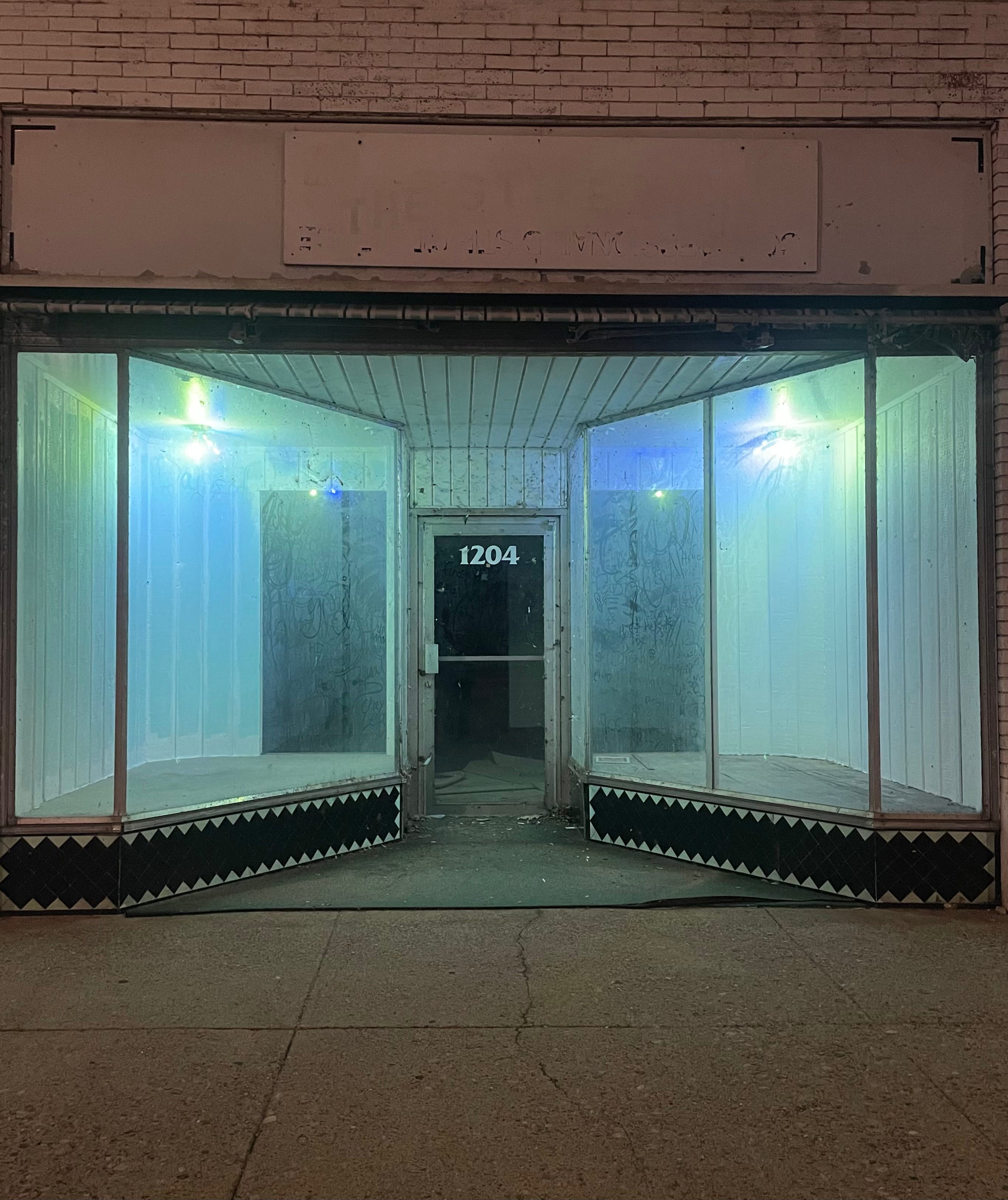
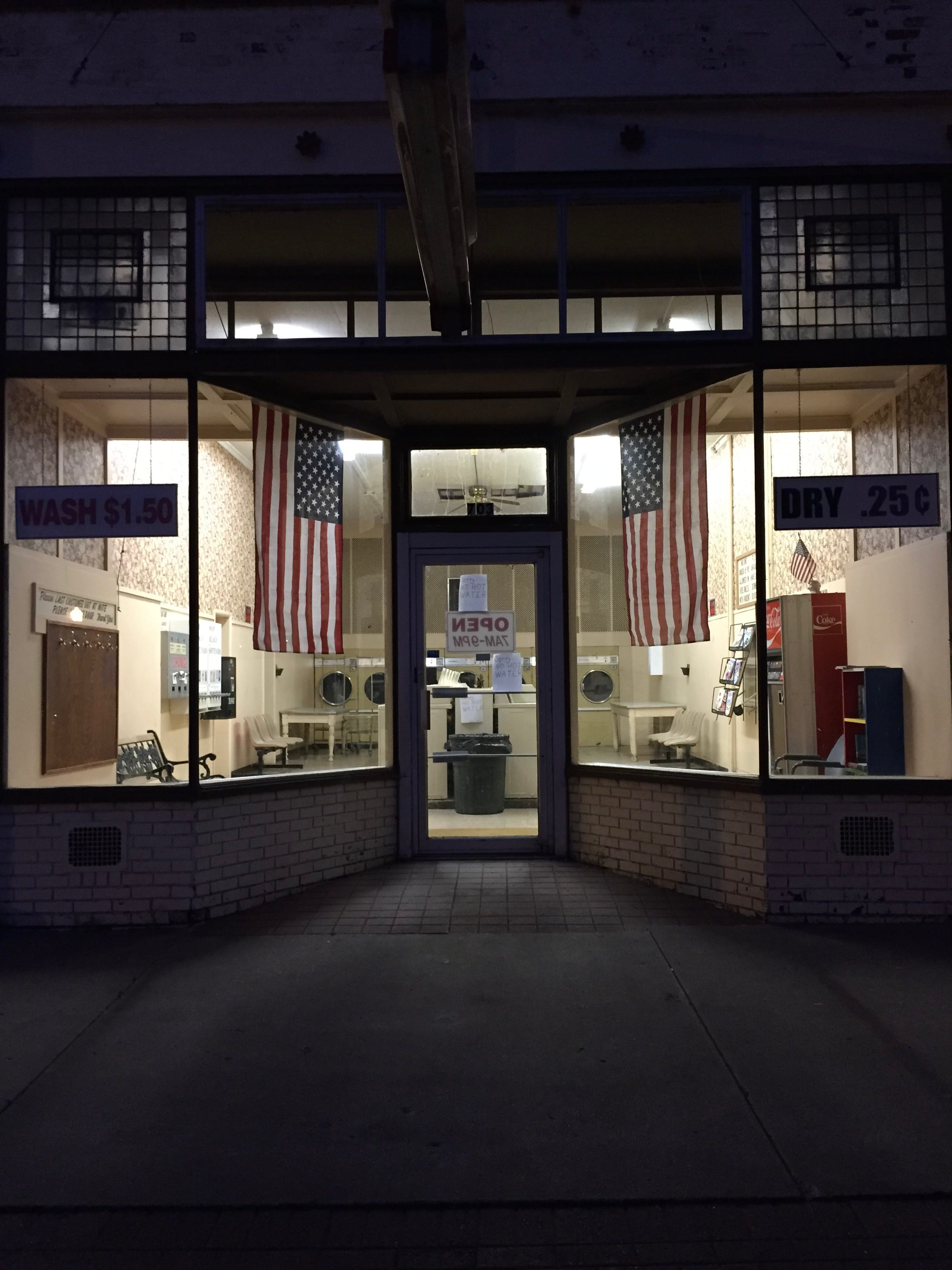
In those days, Escanaba was a shuddering town. Church bells tremored, clanging ceaselessly and almost imperceptibly. Were the town not so eerily silent, you probably wouldn’t even notice. You might, though, notice the rattling, clanging, and fluttering of street lights, plastic signs, flags, or the flower planters that were strung up and swaying all along the Main Street.
Something deep beneath the city was moving. You could feel the unmistakable vibrations through the soles of your shoes. A persistent local rumor posited that the government was detonating some new weapon in the abandoned pit mines scattered around the peninsula.
A regional magazine had sent me to Escanaba to do a story on Miriam Hammer, a woman who was purported to have the world’s largest collection of souvenir bells. While there I also hoped to locate the grave of the legendary giant, Ernst Shysnisky, who at one time had traveled the U.S. billed as “Ernie Shines, the World’s Tallest Man,” and was reported to be buried in Escanaba. (I have spent many, many days on the road tracking down the graves of famous giants, circus elephants, race horses, gorillas, and sideshow performers.)
Miss Hammer’s home was a modest bungalow a block south of downtown. Every wall of the house was lined with shelves, and every one of those shelves was filled with her collection of tiny bells—bells from Niagara Falls, New York City, the Wisconsin Dells, the Vatican, Paris, Amsterdam, the Ozarks, various World Fairs, and myriad other towns, cities, and tourist sites all over the globe.
Upon entering Miss Hammer’s house, I was immediately struck by the noise, which is very, very difficult to describe. Because the vibrations of Escanaba are not violent, the thousands of bells in Miriam’s collection—brass, glass, silver, stainless steel, tin, porcelain, wood—create an unrelenting sound that is as dense as it impossible to pin down. A knock on the door or footsteps in the entryway agitate the bells. I could hear them shivering even as I was standing on the front porch.
Some moments later, as I was sitting on the plastic-covered couch in the living room, I closed my eyes and tried to come up with ways to describe what I was hearing. At times it sounded like an experimental ambient composition, the twilight din of an especially mysterious jungle, or perhaps a gamelan field recording from a temple somewhere in Southeast Asia. I listened a bit more closely and attempted to isolate individual sounds; from one moment to the next I heard what sounded like the distant rattle of dog tags, someone tapping on a glass with a butter knife or drumming absent-mindedly with a pencil on a desktop; there were occasional dings, chirps, and chimes; the gentle shake of a toy tambourine or maracas; pebbles rattling in a jar; a sort of stirring noise; various pops, clangs, claps, and thuds; a key ring being jostled in a coat pocket; strange undertones from a vibraphone or marimba.
What I was hearing struck me after a time as a true wall of sound, an especially off-kilter horror movie soundtrack, and it was unsettling.
It was also unrelenting, but when I mentioned it to Miriam she claimed she didn’t have the slightest idea what I was talking about.
“The noise?” I said. “The constant tremoring of all those bells? You don’t hear that?”
She cocked her head and listened briefly. “No,” she said. “I can’t say I’ve ever noticed it.”
Though no one I talked with in town had ever heard of Ernst Shysnisky, I had little trouble finding the grave of the giant. The gravestones in Lakeview Cemetery (which was right in the middle of town) were equipped with night lights—a local tradition, I was told—and all night those lights sputtered and flickered as the ground beneath them trembled.
The information on the giant’s grave provided nothing but the basics: Birth name, and the dates of his birth and death, along with a poor engraving of some sort of songbird.
I knew about Shysnisky from an exhibit I’d seen years earlier at a local historical society museum in Lemmon, South Dakota. The giant’s 1951 visit to Lemmon was apparently memorable enough (he was said to have eaten 100 pancakes and five pounds of bacon in a single sitting) to warrant a permanent place in the community’s historical record.
I have since logged a great deal of time in libraries, obsessively researching the life of Shysnisky, but I remember the sign in the display case at Lemmon that first drew me into his story: “THE GIANT HAD TO TRAVEL WITH A COBBLER TO REPAIR HIS SHOES!”
Those shoes, I learned, were size 29, and the giant did indeed travel with a cobbler. Shysnisky was 8’ 11”, and had been plagued with excruciating foot problems since he was a boy. He had apparently experienced every sort of foot woe known to man, and a number that were unique to giants.
Shysnisky was so large—and had been so large for so long—that no career was available to him other than capitalizing on his great size. From the time he was 19 years old he had traveled with the old cobbler, who was employed by the shoe company that was the giant’s primary sponsor. He had other commercial sponsors that provided him with bread, eggs, milk, breakfast cereal, pancake mix, and ham. For more than a decade he traveled the country making appearances at shoe stores and a chain of pancake restaurants where he put on prodigious displays of eating. While he ate pancakes and bacon, he signed photographs for the people who came to stare at him.
Another sponsor—a major automobile manufacturer—built him a custom-sized trailer in which he traveled and slept. The trailer was of course immense, and was emblazoned with a crown and the phrase: “HERE COMES THE WORLD’S TALLEST MAN!” An old Greek gambler, whose name was Yannis, drove the trailer and acted as the giant’s manager. Yannis and the cobbler stayed in motels and played a lot of cards.
Very few public bathrooms could accommodate the giant, and he usually had to resort to using a bedpan and portable hospital urinal that were custom-made for him by a medical supply company, which also used the giant’s image for promotional purposes.
For a short and very unhappy period, Shysnisky trained to be a professional wrestler, but it was quickly discovered that he was fragile, weak, and entirely lacking in athleticism.
The giant’s caravan traveled 10 months of the year, all across the U.S. and Canada, making at minimum two public appearances each day. Shysnisky was shy, with a pronounced stammer, and was understandably self-conscious. In his spare time he liked to feed birds in public parks. Birds, he had discovered, were drawn to him, and would often perch on his head and shoulders.
The giant became more and more eccentric as he grew older; he let his hair and beard grow, and purchased a towering Oriental bird cage made of bamboo, and this cage he had fashioned into a hat so that he could have birds fluttering around his head at all times.
The giant’s sponsors eventually cut ties with him over this and other peculiarities, and he spent his last years living in a glass aviary at a park of curiosities in Upstate New York.
Ernst Shysnisky was 31 years old when he died, and I have been unable to find any explanation for how or why he came to be buried in that lonely grave in Escanaba’s Lakeview Cemetery.