
Two Dog Stories
Black Book 62, April 6-7, 2008

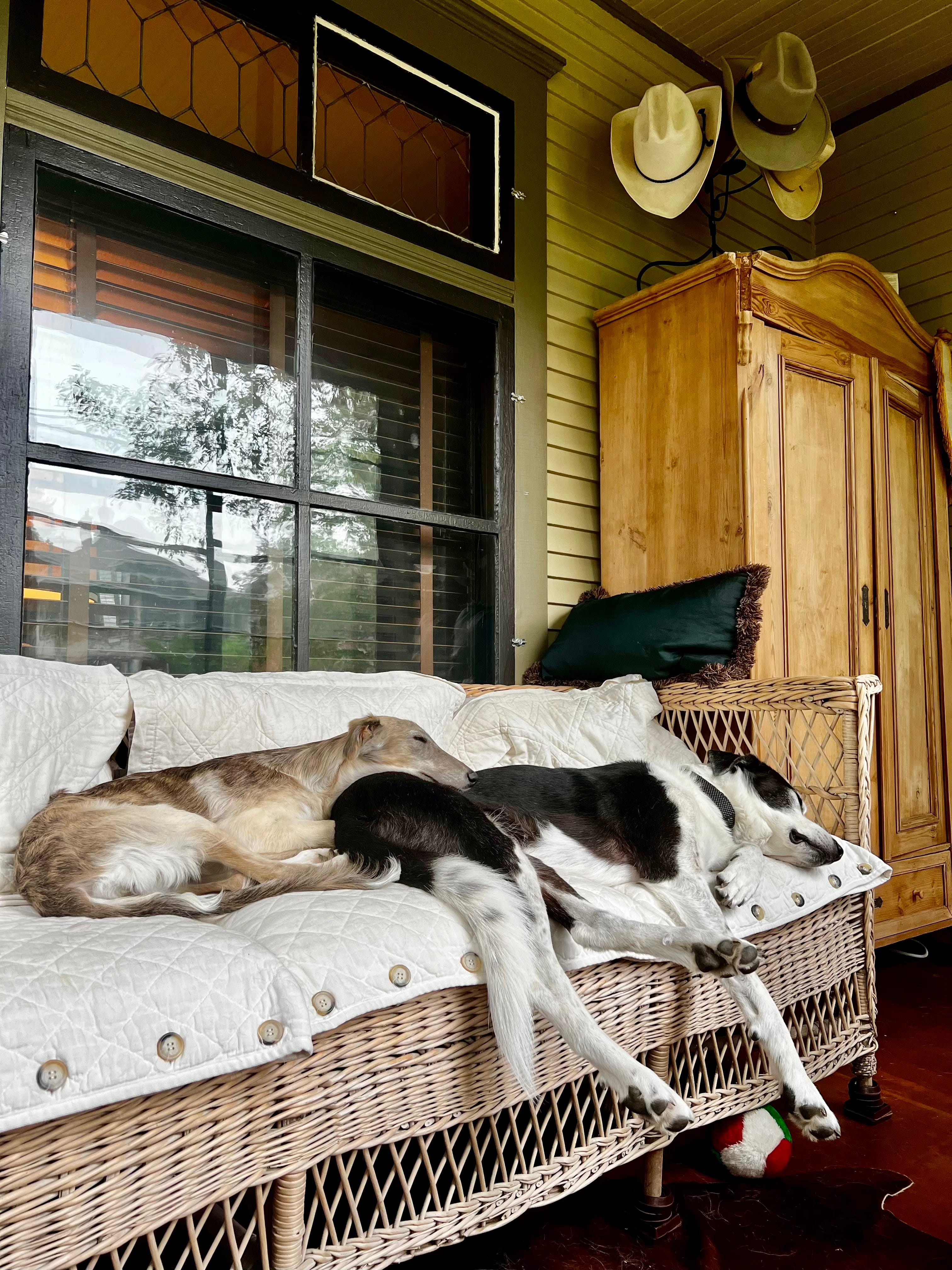
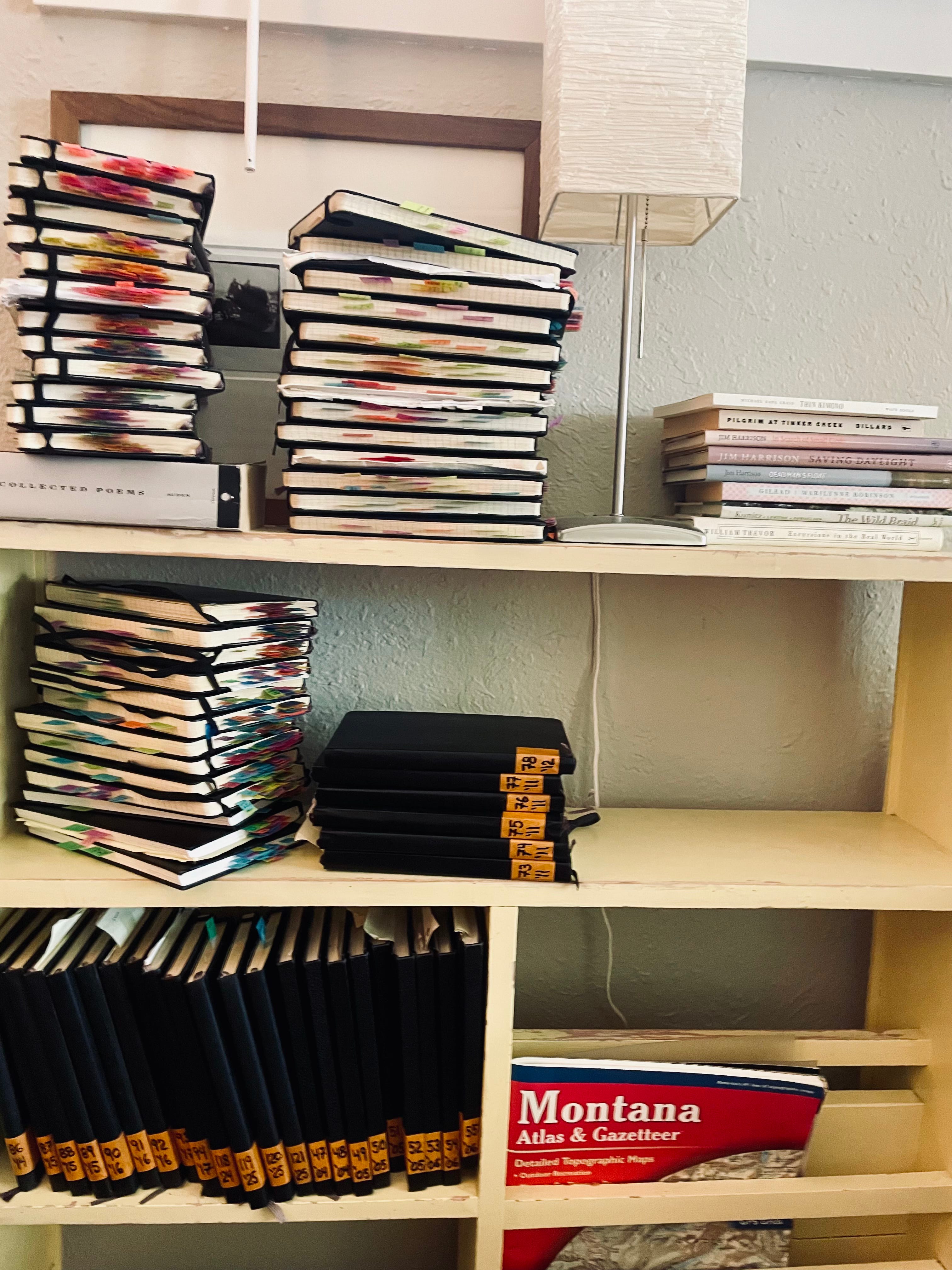
A brief refresher explanation of what I’m up to with Yo Ivanhoe: I’m very slowly making my way through my notebooks—uniform black Moleskines that I’ve written in every single night for more than 32 years—and the shit I’m posting here is straight out of those books, words that have languished in my back pages as I’ve continued to scramble to somehow come up with a new batch of words every night. I’ve now been working on this excavation for almost seven months, and have made my way through 41 of the 132 Moleskines. It’s an exhausting process, and I’ve tabbed and key-worded more than 1,600 pages that are either reasonably complete stories or essays, thousands of things I regard as story-starters, or parts of novels that are unfinished, abandoned, or more or less complete. Because I am a man who has devoted much of my life to caring for and sharing my life with dogs, I guess it’s not surprising to me that I’ve uncovered (so far) more than 100 dog stories buried in the avalanche of the black books.
Eventually I’ll start mixing in some essays on three of my other main preoccupations—photography, music, and politics—but I still spend so much time every day thinking and writing about that stuff that I tend to overlook it when I’m looking for things to post.
Huge gratitude to everyone who has subscribed, and if you feel so inclined, please send some more folks my way. I would—given my track record—have given up long ago if it weren’t for your support. But as nice as it is to have this outlet, like so much else these days it often feels like one more obscure black hole slowly filling up with silence.
Ardoine “Catfish” Crepier was at the dog park one afternoon, sitting along the fence and watching an airplane, when his friend Butch came over and tried to interest him in a stick.
“I am not in the mood,” Ardoine said. “I am feeling out of sorts today.”
“Play stick with me and you’ll surely feel better,” Butch said. “It’s a beautiful day. What can you possibly find to complain about now?”
“My rations,” Ardoine said. “Honestly and truly, I am weary of my rations.”
“Aren’t your people feeding you?” Butch asked.
“Oh, they feed me all right,” Ardoine said. “The same thing, day after day. Brown chunks for breakfast. Brown chunks for dinner. Monday, Tuesday, Wednesday…I forget, what is the day after Wednesday?”
Ardoine was not good with his days.
“Thursday,” Butch said.
“Yes,” Ardoine said. “Thursday, Friday, Tuesday, Sunday.”
“Saturday,” Butch said. “Saturday is the day after Friday. Today, in fact, is Saturday.”
“That’s what I said.”
“No, I’m afraid not, Fish; you repeated Tuesday.”
“What difference does it make,” Ardoine said. “The days are all the same. Brown chunks.”
“Surely there are treats,” Butch said.
Ardoine sniffed at the breeze and tilted his head to watch another airplane. “There are occasional treats, yes,” he said, “but they cannot make up for the relentless monotony of my regular rations. Why, just this morning Dagwood up the street told me that last night he enjoyed a bowl of leftover chow mein. And last week he was given part of what he said was a delicious restaurant burrito.”
“Have you not noticed that Dagwood is in poor health?” Butch asked. “And to the best of my knowledge his people never bring him to the park or take him for a walk. He spends all of his time in that tiny yard, which I think you’ll agree is in a filthy and deplorable state.”
“Perhaps,” Ardoine said. “But he eats chow mein, burritos, and even, he once told me, Fruit Loops and Jello.”
Butch dropped his stick and sat quietly beside his disconsolate friend for a moment, thinking. Butch was a shaggy, bearded fellow; in the distant past his relations had been shepherds. He remembered stories his father had told him, stories he had learned from his own father many years before.
“Once upon a time life was much harder for dogs,” he said to Ardoine. “Even those who were fortunate to receive care and attention from humans were often left to their own devices when it came to eating. They made do, I am to understand, with whatever scraps of garbage were thrown their way. Most often, however, they had to ramble far afield in search of food, and sometimes they had to resort to murdering other creatures. They certainly were not fed in relatively sanitary conditions or on a regular schedule. And they certainly were not given presents on their birthdays or on Christmas Day, as I know both you and I have been. Often as not, they slept outside in the rain and snow and cold. For all of his dietary indulgences, I believe poor Dagwood is closer to those dogs of yore than he is to you or me. You have told me yourself that you have heard his person shout at him repeatedly, and you have seen him suffer blows from both feet and hands. I know that your own people have soft hands and gentle voices. They take you for car rides, and you are allowed to climb on the furniture and sleep alongside them in their beds. Something even I, who know I am loved, am denied.”
Ardoin sighed. “Brown chunks,” he said. “Brown chunks day after day.”
“Most of us subsist on brown chunks,” Butch said. “And I must confess that even after many years I still eat my breakfast and dinner with great relish.”
A fly was buzzing around Ardoine’s head and he shook himself aggressively.
“Well,” he said. “Good day to you, Butch. I suppose I will just have to learn to make do with my brown chunks.”
“Good day to you, Ardoine,” Butch said, and watched his friend trot across the park to his people, who greeted him with happy shouts and clapping hands, and who were greeted in turn with a wagging tail and a series of ecstatic leaps.
URSULA WAS A crow, a bashful crow, relatively quiet as crows go, but she was a crow with a keen eye and an active imagination. A crow not terribly fond of flying—it had never felt natural to her, and she preferred to walk and hop. She was a dreamer and a romantic, although it would never have occurred to her to describe herself as such. She was just the way she was and the way she had always been. Her heart desired what it desired.
And what her heart desired was a dog whose name was Felix. Felix was a mongrel, although Ursula did not know this. He did not look like any other dog or creature that Ursula had ever seen. She had been watching him since he was just a puppy. She liked to sit in a big maple tree across the street from Felix’s house, a perch that allowed her to watch him coming and going every day.
She knew she was in love with him almost from the moment she first laid eyes on him, but she really and truly knew she was in love several months later, when Felix was out for a walk on a sunny day in the spring and passed directly beneath the tree Ursula was sitting in. She had hopped down several branches—the tree was still relatively bare—and flapped her wings to try to attract Felix’s attention.
Felix had paused for an instant and peered up at her.
“That, Felix, is a bird,” the man walking with Felix had said. “A crow.”
Felix had look directly at Ursula and smiled. As he proceeded on his walk, Ursula had called out to him, “I am Ursula! I am Ursula! I am Ursula!” She was not sure that Felix had heard her, but the next time he passed beneath the tree in which she was sitting, he had looked up at her, smiled again, and said, “Hello, Ursula. Good day to you.”
And that was it. That did it. In that moment, Ursula knew she would one day marry that dog.
I love all your stories, but these in particular. I believe animals communicate just like humans. Dog parks keep them stimulated. Dolly has her favorite friends there, although Snuggles mostly keeps to herself roaming the grounds to pee where any dog has ventured to pee before her. But she also has her own interactions with the dogs that show an interest in playing.
As always, good stuff. “One more obscure black hole filling up with silence” perfectly sums up my experience sharing my creative efforts. I genuinely look forward to your posts and read every word of them. I have laughed out loud, nodded in bemused agreement, and have been moved to tears. I hope you keep up the effort, it’s incredibly inspiring.